How to design a custom football shirt (and get it right)
September 12, 2026
Designing a custom football shirt is simpler than most people expect, and harder to get right than the configurator sites make it look. The decisions you make upfront, cut, colorway, badge placement, detail style, determine everything about whether the finished shirt matches what you had in your head. Here is what to think through, in the order it matters.
Start with the cut
The cut is the foundation. Everything printed or stitched on the shirt sits on top of it, so getting the silhouette wrong means the rest of the work is undermined before it starts.
For a match shirt feel, a standard set-in sleeve with a slightly tapered body is the usual starting point. Retro cuts run roomier through the chest and shoulders, which suits heavier fabrics and a vintage aesthetic. A street cut is closer-fitting and shorter in the body, worn more as a casual top than as a playing shirt.
Think about how you will actually wear it. A shirt you plan to wear to games needs different proportions from one you want to hang framed or keep as a collector piece. If you are not sure, describe the look you are going for and ask. A good maker will help you land on the right shape.
Choose a colorway that holds up
Colour is where most custom shirt decisions go wrong. Not because people choose bad colours, but because two colours that look good on a screen do not always read well together on fabric at distance.
Classic two-tone combinations work because they have been tested across decades of football shirt design. Amber-gold with navy is one. Red with white. Royal blue with yellow. They are not boring choices; they are proven ones.
A few things to decide:
- Base colour: the dominant colour across the body of the shirt
- Contrast colour: used on the collar, sleeve trim, or side panels
- Detail colour: the colour of the name, number, and badge outlines
Three colours is usually enough. More than that and the shirt starts to compete with itself. If you have a badge with its own palette, build outward from those colours rather than adding new ones on top.
Names, numbers, and badges: the details that make it yours
This is the part most people spend the most time on, and rightly so. A name and number printed in the wrong font, at the wrong size, in a colour that reads badly against the base, is the most common way a custom shirt falls apart.
Font matters. Block serif fonts read well from a distance and hold up in print. Thin or decorative fonts lose definition on fabric. If you have a reference, a shirt you love the lettering on, send it. That is more useful than trying to describe it in words.
Number size is usually standard, but placement varies. Back of the neck to the top of the number is a measurement worth confirming before production starts.
Badges are the most technically complex element. A simple badge with clean lines and three or four colours is straightforward to reproduce at quality. A detailed heraldic crest with many colours and fine detail takes more time and costs more to do properly. If you are working from an existing badge, send the highest-resolution version you have. If you want something designed from scratch, a brief description and a few reference points are enough to get started.
Why handmade beats mass-produced for custom orders
Configurator sites offer customisation in the sense that you can type a name into a box. What they cannot offer is a shirt built to your specific brief: badge placement adjusted, collar style chosen, colorway mixed to what you described rather than selected from a dropdown.
Own Kit makes each shirt by hand, one at a time, in Romania. No configurator runs the process. There is a person at a bench reading your brief and making decisions about your shirt. That is why the result looks different. And it is why, when the shirt arrives, it is the only one like it.
The price reflects that. The Commission shirt starts at €180. The Street starts at €110. Every shirt includes one revision before anything is cut. See the full range here.
How to place your order
The process is straightforward. Pick a starting point from the product pages, fill in the brief, and tell us what you want. Collar style, colorway, badge, name, number. A paragraph is enough; you do not need a design file or technical drawings. We come back within 48 hours with questions if we need them, and a layout preview before production starts.
Lead time is typically three to four weeks from brief confirmation to delivery, depending on complexity. If you have a deadline, a birthday, a matchday, an anniversary, say so at the start. We will tell you honestly if we can hit it.
Start your brief at the order page.
Frequently asked questions
Do I need to provide my own design files? No. A description is enough to start. If you have reference images or a badge file, attach them. If you have an idea and no artwork, describe it and we work from there.
How many colours can the shirt have? There is no hard limit, but three to four colours produces the best results. More than that and the shirt starts to look busy. Badge colours are separate from shirt colours.
Can I see the design before it is made? Yes. Every commission includes a layout preview before we cut anything. You approve it first.
How long does delivery take? Three to four weeks from confirmed brief to delivery, shipped across Europe. Complex badge work or unusual fabric can add time. Tell us your deadline in the brief and we will confirm whether it is achievable.
Keep reading
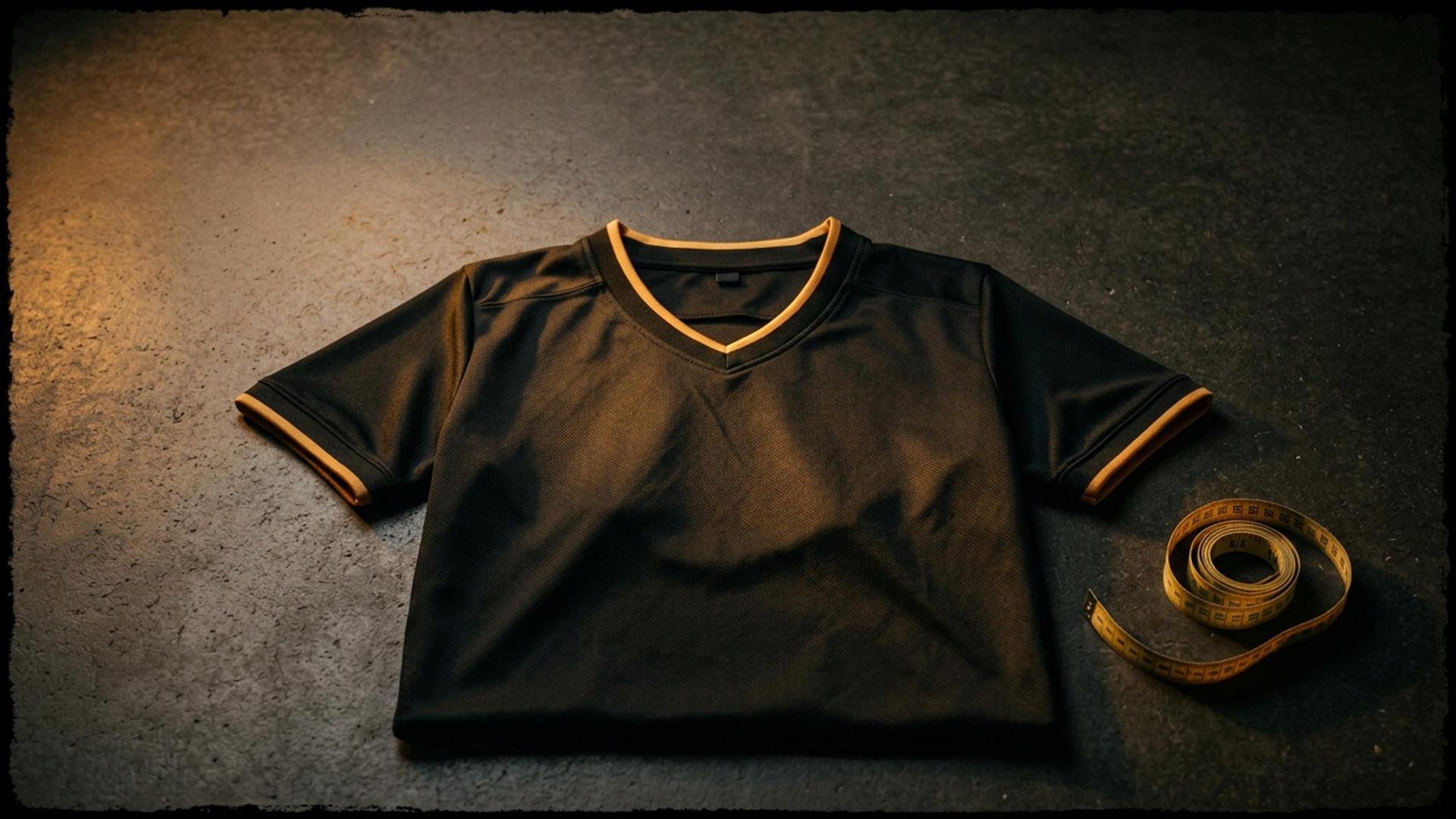 Custom football shirt sizing: how to get the right fit
Off-the-shelf size charts don't work when a shirt is built to your body. Here's how to measure yourself for a custom football shirt and why handmade sizing is a different conversation from standard S/M/L.
September 12, 2026
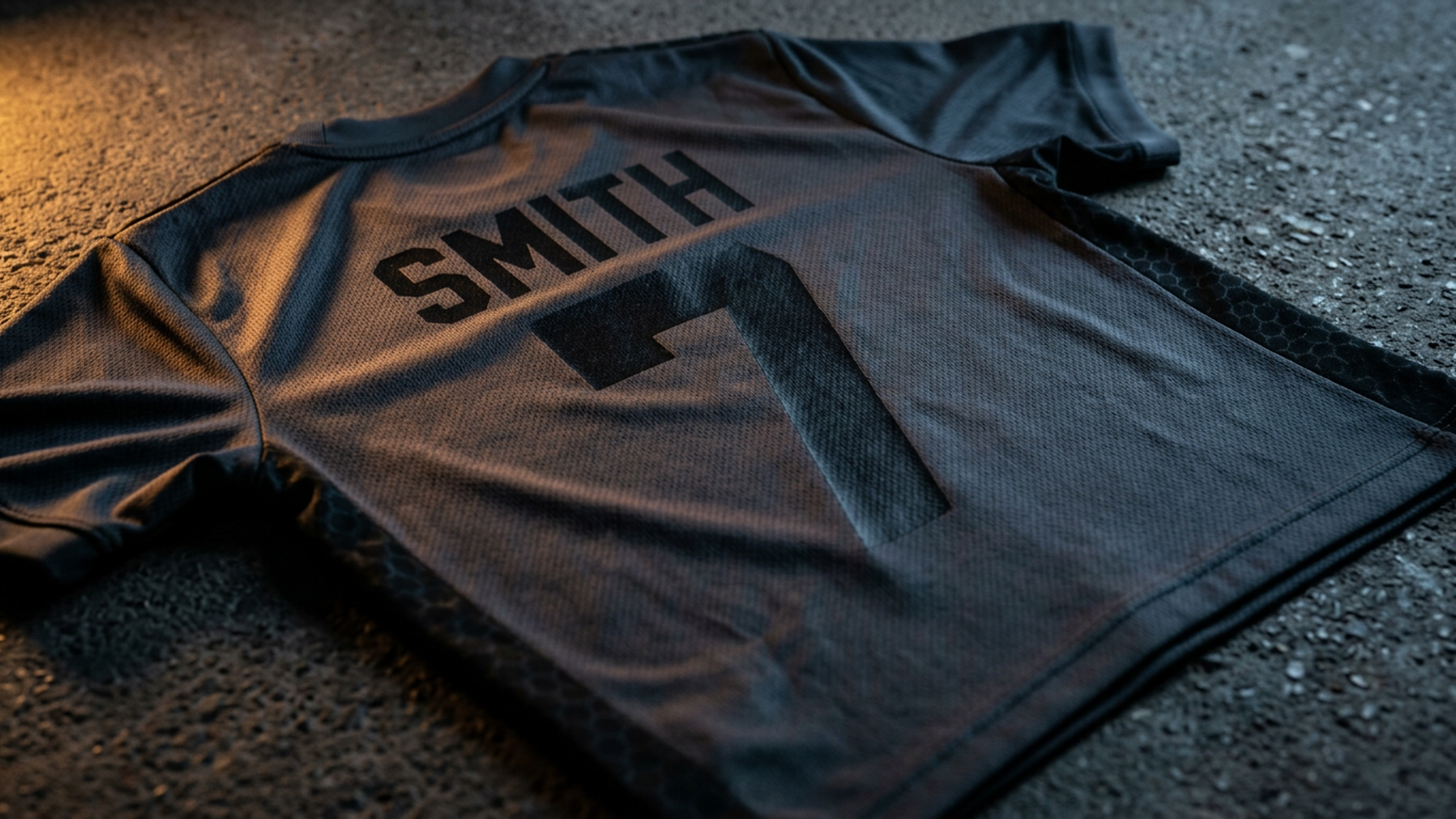 How to order a custom football shirt made just for you
Made to order means something different from a personalised shirt. Here is what that looks like in practice, from brief to finished shirt.
August 12, 2026
 Best custom football kit options for amateur clubs in Europe
The big kit suppliers want minimum orders of fifty. Here is what the alternative looks like for small clubs that want their own identity without the bulk commitment.
August 12, 2026